Build unilateral pulling strength
Develop strong Pull Ups and Archer Pull Ups, then use assisted one-arm variations to progressively transfer more of your bodyweight onto the working arm.
 dynamic
The One Arm Pull Up requires exceptional relative pulling strength, grip strength, and control through the entire range of motion. Build strong Pull Ups and Archer Pull Ups first, then progressively transfer more load to one arm using assisted repetitions, isometric holds, and controlled negatives. A small natural rotation towards the working arm is acceptable, but the free arm should not touch the bar or assist the pull.
Develop strong Pull Ups and Archer Pull Ups, then use assisted one-arm variations to progressively transfer more of your bodyweight onto the working arm.
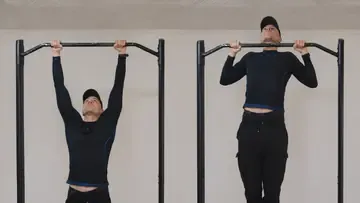
Hang from the bar with one overhand grip and your working elbow fully extended. Establish control through the shoulder before beginning the pull and keep the free hand away from the bar and working arm.
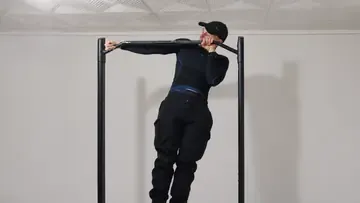
Pull by driving your working elbow down towards your side. Keep your body relatively close to the bar and control any natural rotation instead of using a kick or aggressive twist for momentum.
Continue pulling until your chin clearly passes above the bar. Maintain control at the top instead of reaching with your neck to create the appearance of extra height.
Reverse the movement slowly until your working elbow is fully extended again. Maintain shoulder control through the bottom rather than suddenly dropping into the one-arm hang.
Grabbing your wrist, forearm, working arm, or the bar with your free hand turns the movement into an assisted progression. These variations are useful for training, but they are not a strict One Arm Pull Up.
Starting with a permanently bent elbow removes one of the hardest portions of the movement. For a full repetition, return to an extended working elbow under control before beginning the next pull.
Some rotation towards the working arm is natural, but aggressively twisting your torso or throwing your legs can create momentum that replaces part of the unilateral pulling demand.
Controlled one-arm eccentrics are an important progression towards the full movement. If you immediately drop through part of the descent, use assistance until you can control that range instead of repeatedly forcing full negatives.
The One Arm Pull Up is a vertical pulling exercise performed with one hand on the bar and no assistance from the opposite arm. A strict repetition starts with the working elbow extended and finishes when your chin passes above the bar.
The main distinction is the grip. A One Arm Pull Up uses an overhand or pronated grip, while a One Arm Chin Up uses an underhand or supinated grip. Both require exceptional unilateral pulling strength, but they should be treated as separate variations.
The lats, biceps, and upper back produce most of the pulling force. The forearms maintain the one-handed grip, the rear shoulders help stabilize the upper arm, and the abdominals and obliques control the torso and resist excessive swinging and rotation.
Build strong bilateral Pull Ups, then progress through Archer Pull Ups and increasingly difficult assisted one-arm repetitions. Isometric holds and controlled one-arm negatives can then bridge the gap towards your first full concentric repetition.
There is no universal number of regular Pull Ups that guarantees a One Arm Pull Up. Strong bilateral pulling is important, but assisted one-arm strength, grip, shoulder control, and the ability to control unilateral negatives are more specific indicators of readiness.