Master the Dragon Flag
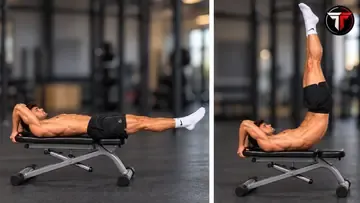
Build controlled full Dragon Flags first. Keep your body rigid from shoulders to feet and make sure you can control both the lowering and raising phases without bending significantly at the hips.
 dynamic
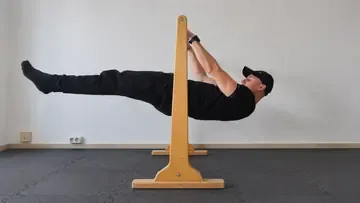
The One Arm Dragon Flag keeps the same fundamental body position as a regular Dragon Flag: your shoulders and upper back provide the base while your torso and legs move together as one rigid lever. The difference is that only one arm maintains the anchor behind you, creating a strong rotational challenge in addition to the normal anti-extension demand. Master the standard Dragon Flag first, then progressively reduce the contribution of one hand before attempting completely unsupported one-arm repetitions.
Build controlled full Dragon Flags first. Keep your body rigid from shoulders to feet and make sure you can control both the lowering and raising phases without bending significantly at the hips.
Perform Dragon Flags while gradually reducing the grip of one hand. Start by using fewer fingers or a lighter grip while your main arm takes progressively more of the anchoring load.
Begin from the raised position, release the assisting hand, and lower your straight body as slowly as possible using one arm for the upper-body anchor. Stop before your hips or lower back lose position.
Gradually extend your one-arm negative closer to horizontal while resisting both extension and rotation. Keep your shoulders stable and prevent your hips from twisting towards the working side.
Lower under control with one arm, maintain a rigid body near the bottom, and reverse the movement without piking at the hips. Train both arms rather than developing the skill exclusively on your stronger side.
A shaky standard Dragon Flag is not a good foundation for the one-arm version. First develop strong control through the full two-arm movement, then gradually unload one hand instead of immediately removing it.
The unilateral anchor creates a strong tendency for your torso and pelvis to rotate. Brace your obliques and keep your shoulders, hips, and legs as controlled as possible instead of twisting to shorten the effective lever.
Folding at the hips makes the lever considerably easier. Keep your glutes engaged and move your torso and legs together rather than raising the legs first and letting the hips follow.
Do not sacrifice the eccentric phase just to reach a lower position. If you cannot resist the descent with one arm, use partial range or light assistance from the second hand until you can control more of the movement.
It is an advanced Dragon Flag variation performed with only one arm maintaining the upper-body anchor. Your shoulders and upper back remain supported while your torso and legs move as a rigid lever, creating additional anti-rotation and unilateral upper-body demands.
The abdominals maintain the rigid trunk position while the obliques become especially important for resisting rotation. The lats and surrounding upper-body muscles help maintain the one-arm anchor, while the glutes keep the hips extended and the body connected as one lever.
Yes. A controlled full Dragon Flag is the most specific foundation because the one-arm version keeps the same basic body mechanics while removing one side of the upper-body anchor. Once the standard movement is strong, progressively reduce the assistance from one hand.
Start with strong full Dragon Flags, then reduce the grip of one hand using fewer fingers or lighter assistance. Progress to one-arm negatives and partial repetitions before attempting the complete movement with one arm.
No. In a One Arm Dragon Flag, the upper back and shoulders remain the main contact with the surface while one arm maintains the anchor behind you. A Dragon Press uses a different support mechanism and requires substantially different straight-arm pressing and shoulder strength.