Establish the Back Lever
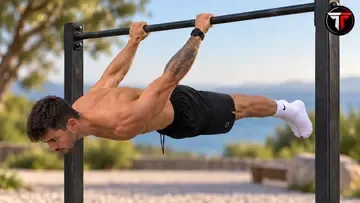
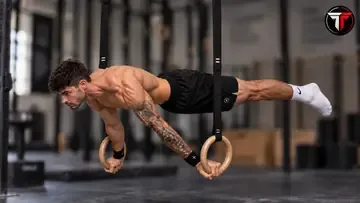
Begin in a full Back Lever on the rings. Keep your body horizontal and face down, with your legs together, hips extended, and elbows completely locked.
 dynamic
Begin in a stable Back Lever on gymnastics rings, with your body horizontal, facing the floor, and both elbows completely extended. Initiate a powerful but controlled straight-arm press, gradually moving your shoulders and body upward while maintaining a rigid body line. The transition passes through extreme anterior shoulder loading as the rings move relative to your torso. Continue pressing until you reach a Full Planche above the rings, with your body horizontal and supported entirely by straight arms. The Pelican combines demanding Back Lever mechanics with elite-level Planche strength and requires exceptional preparation of the shoulders, elbows, and biceps tendons.
Begin in a full Back Lever on the rings. Keep your body horizontal and face down, with your legs together, hips extended, and elbows completely locked.
Generate force through your shoulders while maintaining straight arms. Begin moving your body upward without swinging, bending your elbows, or losing your body alignment.
Continue the straight-arm press through the most demanding portion of the movement. Allow the rings to follow the necessary shoulder path while maintaining symmetrical control and a rigid body.
Progressively shift into the Planche support position, bringing your shoulders forward of the rings while keeping your elbows locked and your torso, hips, and legs aligned.
Finish in a Full Planche on rings with your body horizontal, legs extended, and arms completely straight. Stabilize the rings and maintain full-body tension without dropping your hips.
The Pelican is a straight-arm strength transition. Bending the elbows changes the movement mechanics and reduces the intended shoulder leverage.
Avoid excessive hip flexion, sagging, or back arching to shorten the lever. Maintain a straight body line throughout the transition.
Swinging or bouncing out of the Back Lever can bypass the most demanding portion of the movement. The strict Pelican requires a controlled strength press.
Do not force the rings or shoulders through an uncontrolled range of motion. The transition places exceptional stress on the anterior shoulders, elbows, and biceps tendons.
Stopping in a bent-arm support or an incomplete Planche does not complete this variation. The finishing position requires a recognizable Full Planche with straight arms and a horizontal body.
The Pelican is an elite gymnastics rings strength transition. In this variation, the athlete moves from a horizontal Back Lever into a Full Planche using a controlled straight-arm press.
Yes. The full straight-arm Pelican is an exceptionally difficult rings movement because it combines extreme shoulder leverage, demanding body control, and a transition between two advanced horizontal strength positions.
The anterior deltoids, pectorals, and biceps are heavily loaded during the straight-arm transition. The triceps, upper back, lats, forearms, and core contribute to joint stability and body alignment.
A Pelican Curl is a bent-arm exercise that emphasizes elbow flexion and biceps strength. The full Pelican described here is a straight-arm rings strength transition from Back Lever to Full Planche.
You should already have exceptional control of the Back Lever and Full Planche on rings, together with extensive straight-arm strength preparation. Assisted transitions and controlled negatives can help develop the movement under qualified supervision.