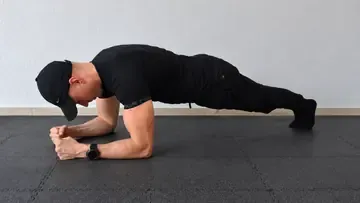
Start in a high plank position
Place your hands approximately shoulder-width apart with your elbows fully extended. Extend your legs behind you and support your feet on your toes.
 static
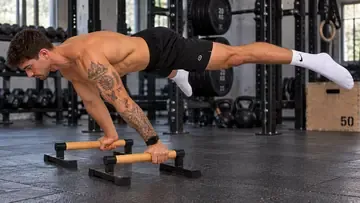
Begin in a high plank position with your hands approximately shoulder-width apart, your elbows fully extended, and your feet resting on the balls of your toes. Actively push the floor away to protract your shoulder blades and engage your abdominal muscles and glutes. Gradually shift your shoulders forwards beyond your wrists while keeping your arms straight and your body rigid. Allow your feet to pivot naturally on your toes as your weight moves forwards. Maintain a slightly rounded upper back through active scapular protraction without allowing your lower back to sag. Hold the forward-leaning position for a controlled duration, then slowly shift your shoulders backwards to return to the starting position. Increase the forward lean gradually as your strength and wrist tolerance improve.
Place your hands approximately shoulder-width apart with your elbows fully extended. Extend your legs behind you and support your feet on your toes.
Push firmly against the floor to spread your shoulder blades around your rib cage. Engage your core and glutes to maintain a rigid body position.
Gradually lean forwards until your shoulders move beyond your wrists. Keep your elbows straight and allow your feet to pivot naturally.
Maintain the forward lean with locked elbows, active scapular protraction, and a stable pelvis. Keep your toes in contact with the floor throughout the hold.
Slowly shift your shoulders backwards while maintaining control. Return to the high plank position before relaxing your arms and shoulders.
Avoid bending your arms to support the forward lean. The Lean Planche is a straight-arm exercise, and elbow flexion changes the strength demands.
Do not allow your shoulder blades to collapse together or your chest to sink between your arms. Actively push the floor away throughout the hold.
Maintain abdominal and glute engagement to prevent excessive lumbar extension. Keep your pelvis controlled as you lean forwards.
Avoid attempting a forward lean that exceeds your current shoulder strength or wrist tolerance. Progress gradually while maintaining proper alignment.
Do not lift your hips into a pike position to compensate for insufficient strength. Maintain a relatively straight body line from your shoulders to your ankles.
Avoid passively hanging on your shoulder joints. Maintain active shoulder engagement and controlled scapular positioning throughout the exercise.
Forward leaning increases the load and extension demands on the wrists. Reduce the lean, adjust your hand position, or use suitable parallettes if wrist extension becomes uncomfortable.
A Lean Planche is a static straight-arm exercise in which the athlete shifts the shoulders forwards beyond the wrists while maintaining a rigid body position with the toes supported on the floor.
The Lean Planche primarily challenges the anterior deltoids, serratus anterior, and chest. The triceps, forearms, abdominal muscles, and glutes contribute to maintaining straight arms and full-body stability.
Yes. Lean Planche and Planche Lean generally refer to the same straight-arm forward-leaning exercise used to develop planche-specific strength.
Yes. The elbows should remain fully extended throughout the hold. This develops straight-arm strength and distinguishes the exercise from bent-arm planche variations.
No. In the standard Lean Planche, the toes remain in contact with the floor. Lifting both feet creates a different and substantially more demanding balance and strength requirement.
Lean only as far as you can while maintaining straight elbows, active scapular protraction, controlled wrist loading, and a stable body position. Increase the distance gradually over time.
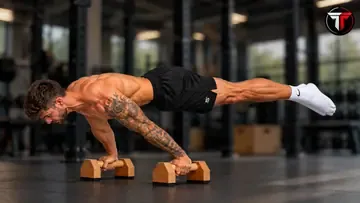
Yes. The Lean Planche develops shoulder strength, scapular control, and tolerance to forward loading that transfer to planche progressions. However, additional strength and balance training are required for the Full Planche.
Gradually increase the forward lean, extend the hold duration, or perform the exercise on parallettes. Progress towards Tuck Planche holds once you have developed sufficient strength and control.