Establish your grip
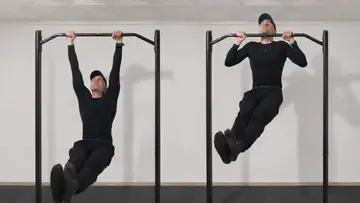
Grip a secure horizontal bar with your hands approximately shoulder-width apart. Keep your shoulders active and prepare to support your bodyweight.
 dynamic
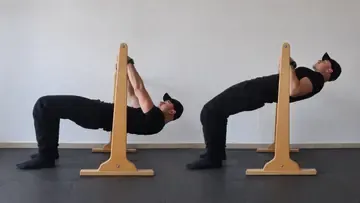
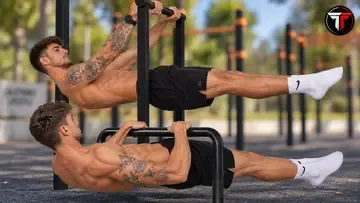
Begin beneath a secure horizontal bar and establish an inverted L-shaped position with your torso approximately horizontal and your legs extended at roughly 90 degrees to it. Maintain abdominal tension as you bend your elbows and pull your upper body towards the bar. Keep your hips and legs controlled rather than allowing them to swing or change position. Slowly extend your arms to return to the starting position. Build a strong foundation with strict Pull Ups, L Sit holds, and controlled horizontal pulling before attempting the full variation.
Grip a secure horizontal bar with your hands approximately shoulder-width apart. Keep your shoulders active and prepare to support your bodyweight.
Position your torso approximately horizontal beneath the bar and extend your legs to form a controlled L shape. Brace your core and keep your knees straight.
Bend your elbows and pull your upper body towards the bar while maintaining the L position. Avoid kicking or swinging your legs to create momentum.
Continue pulling until your upper torso approaches the bar. Keep your shoulders controlled and maintain the angle between your torso and legs.
Gradually extend your elbows and return to the starting position without dropping your hips or losing the L-shaped body position.
Allowing the legs to drop or the hip angle to change removes the defining shape of the exercise. Use an easier variation if you cannot maintain the position.
Avoid generating momentum by kicking your legs during the pulling phase. Keep the movement controlled through the back and arms.
Maintain abdominal tension throughout the repetition. Do not allow your pelvis to drop or rotate uncontrollably as you approach the bar.
Avoid performing only small elbow movements. Use the largest controlled range available while preserving the intended body position.
Do not repeatedly rotate your torso or swing your legs to complete the pull. Keep the inverted L shape consistent during both the upward and downward phases.
It is a pulling exercise performed with the torso approximately horizontal beneath a bar and the legs extended in an L shape. The athlete pulls the upper body towards the bar while maintaining the position.
The lats, upper back, and biceps provide the main pulling force. The abdominals and obliques stabilize the torso, while the hip flexors help maintain the raised-leg position.
A regular L Sit Pull Up is a vertical pull performed with the legs raised in front of the body. The Inverted L Sit Pull Up uses a more horizontal torso position, changing the pulling angle and stabilization demands.
Not necessarily, but Front Lever progressions can help develop the horizontal pulling strength and body control required. Strict Pull Ups and L Sit work are also useful foundations.
Begin with supported horizontal rows and bent-knee variations. Gradually reduce assistance and extend your legs while maintaining a stable torso and controlled pulling motion.